Cultures across centuries have used plant based powders and extracts for dyeing hair. From Egypt to India, plant-based ingredients were trusted not only for their coloring abilities but also for their nourishing properties. Today, as more people become conscious of what they put on their bodies, natural hair dyes are regaining popularity—and for good reason. They offer numerous benefits compared to chemical hair dyes, making them a healthier and more sustainable choice.
What is a natural hair dye, and what is not
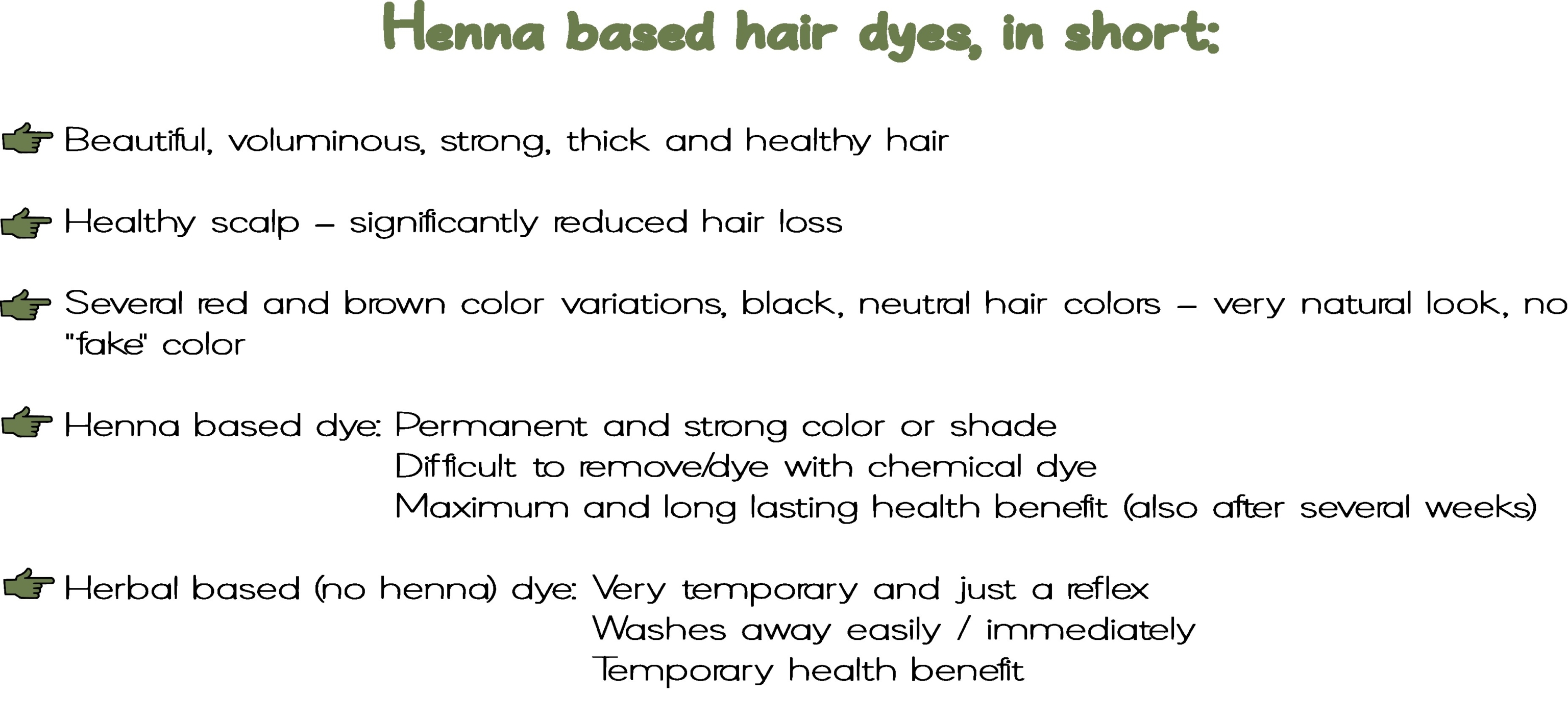
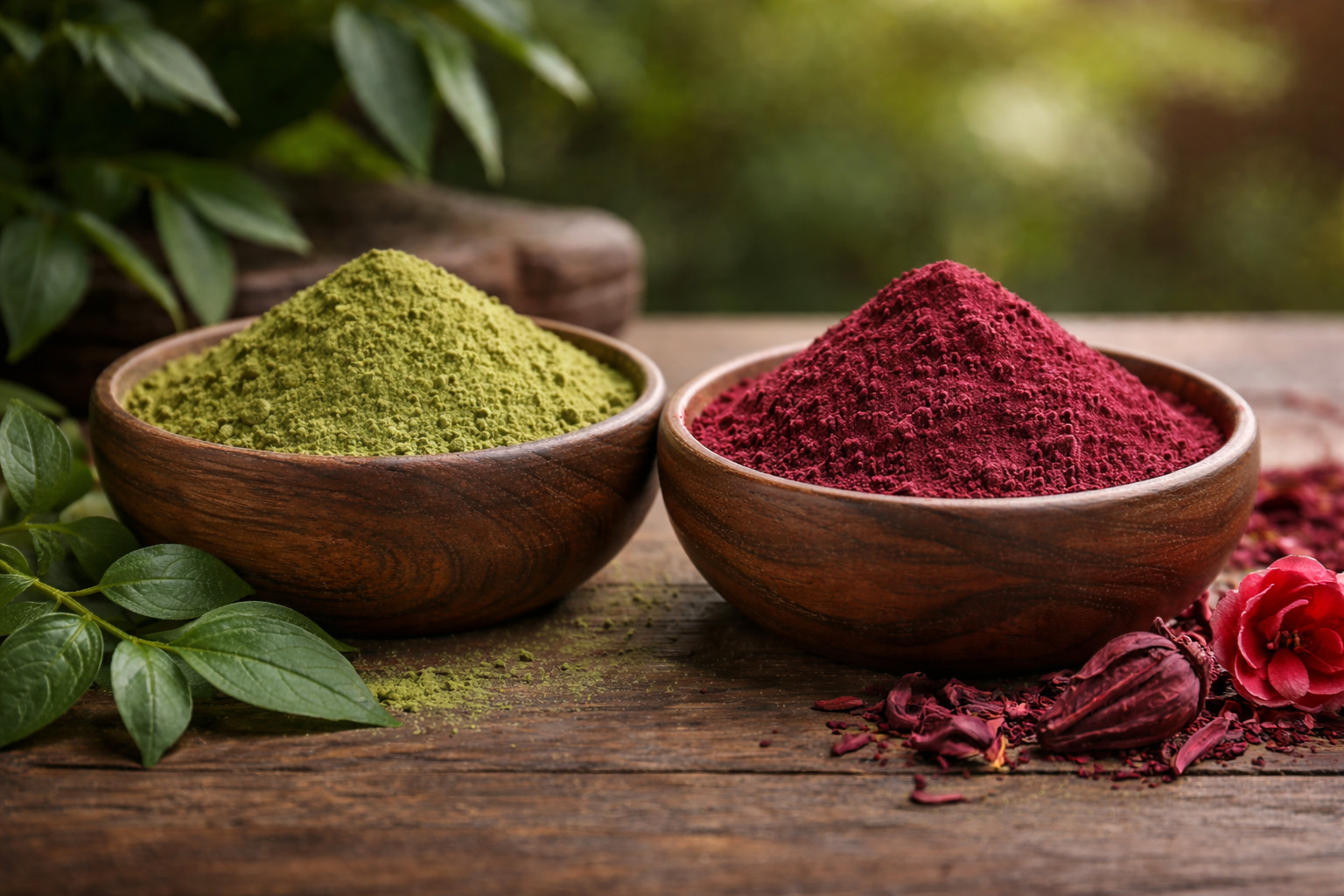
Natural hair dyes are normally exclusively plant based. Henna (Lawsonia Inermis) is the main ingredient of most permanent natural hair dyes. Natural hair dyes which do not contain henna give mostly a temporary stain. Some “natural” hair dyes may also contain clay. These dyes can be considered “natural” but not 100% plant based. Clay contains metal impurities, and may lead to unpredictable results if used on hair that was previously dyed with chemical products. Some suppliers sell “herbal” dyes, however these may contain some chemicals like sodium picramate or peroxides. These are not 100% natural dyes.
Advantages of natural hair dyes over chemical dyes
One of the most significant advantages of natural hair dyes is their gentle composition. Unlike conventional chemical dyes that often contain picramates, peroxides, ammonia, parabens, and synthetic fragrances, natural alternatives are entirely made from plant-based ingredients such as henna, indigo, cassia, alma, hibiscus, manjistha, camomile, and other herbal extracts. These ingredients work with the hair’s natural structure rather than penetrating and damaging it. As a result, they do not cause dryness, brittleness, and split ends that are commonly associated with chemical coloring treatments. On the contrary, these plants nurture and strengthen hair, making it look more voluminous and decreasing hair loss.
Another major benefit is reduced scalp irritation and allergic reactions. Many people experience itching, redness, or even more severe reactions after using chemical dyes. Some ingredients found in chemical dyes may also be mutagenic, increasing the chance of cancer. Natural dyes, being 100% free from synthetic chemicals, are much less likely to cause these issues. While it is still important to perform a patch test before use, plant-based dyes are generally much better tolerated. This makes them especially suitable for individuals with allergies or anyone trying to minimize exposure to potentially harmful substances. Note that people with G6PD deficiency (which is an extremely rare condition) should avoid using henna and henna based products.
In addition to being safer, natural hair dyes can actually improve the condition of hair over time. Ingredients like henna coat the hair shaft, adding thickness, shine, and strength. Instead of stripping hair of its natural oils, they help seal moisture, resulting in smoother and healthier-looking hair. Already from the first use, people notice enhanced texture and increased volume. Chemical dyes, on the other hand, often require intensive conditioning treatments afterward to repair the damage they cause.
Environmental impact is another important consideration. The production and disposal of chemical hair dyes contribute to water pollution and environmental waste. Harsh ingredients can enter waterways during rinsing, affecting aquatic life and ecosystems. Natural hair dyes, being biodegradable and derived from renewable plant sources, are far less harmful to the environment.
Furthermore, natural hair dyes provide a more subtle and authentic-looking result. Rather than producing flat, artificial tones, plant-based dyes enhance the hair’s existing color and create natural highlights. The outcome often looks more natural by blending gracefully with the underlying hair color.
Disadvantages of natural hair dyes
One disadvantage of natural hair dyes is that they cannot lighten the original hair color especially when it is dark. Therefore the only way to achieve a lighter color is to use a chemical treatment and later apply a natural hair dye. Although this is against our philosophy, on this blog we described a simple method to do this with hydrogen peroxide with minimal or no hair damage.
One big advantage of henna based natural hair dyes is that they are permanent. Where permanent, means really permanent. However, for some people this is a disadvantage. People who like to change hair color frequently may not find natural hair dyes appealing because of this reason. With henna based hair dyes it is not possible to have dramatically different colors in a short time. With henna based hair dyes you may certainly dye your hair red, and immediately after dark brown or black. However the opposite is not possible. Applying chemical products to your hair after the use of henna based dyes may be difficult or lead to unexpected results.
You cannot obtain completely “artificial” colors which do not exist in nature (like blue, pink or green) with natural hair dyes.
Natural hair dyes are only for external use. Just like chemical hair dyes, do not ingest, do not use for children and keep them out of reach of children.